
School Refusal vs. a Rough Morning: 5 Signs Parents Need to Know
By Dr. Larsen, Founder and Clinical Director, Larsen Behavioral Wellness
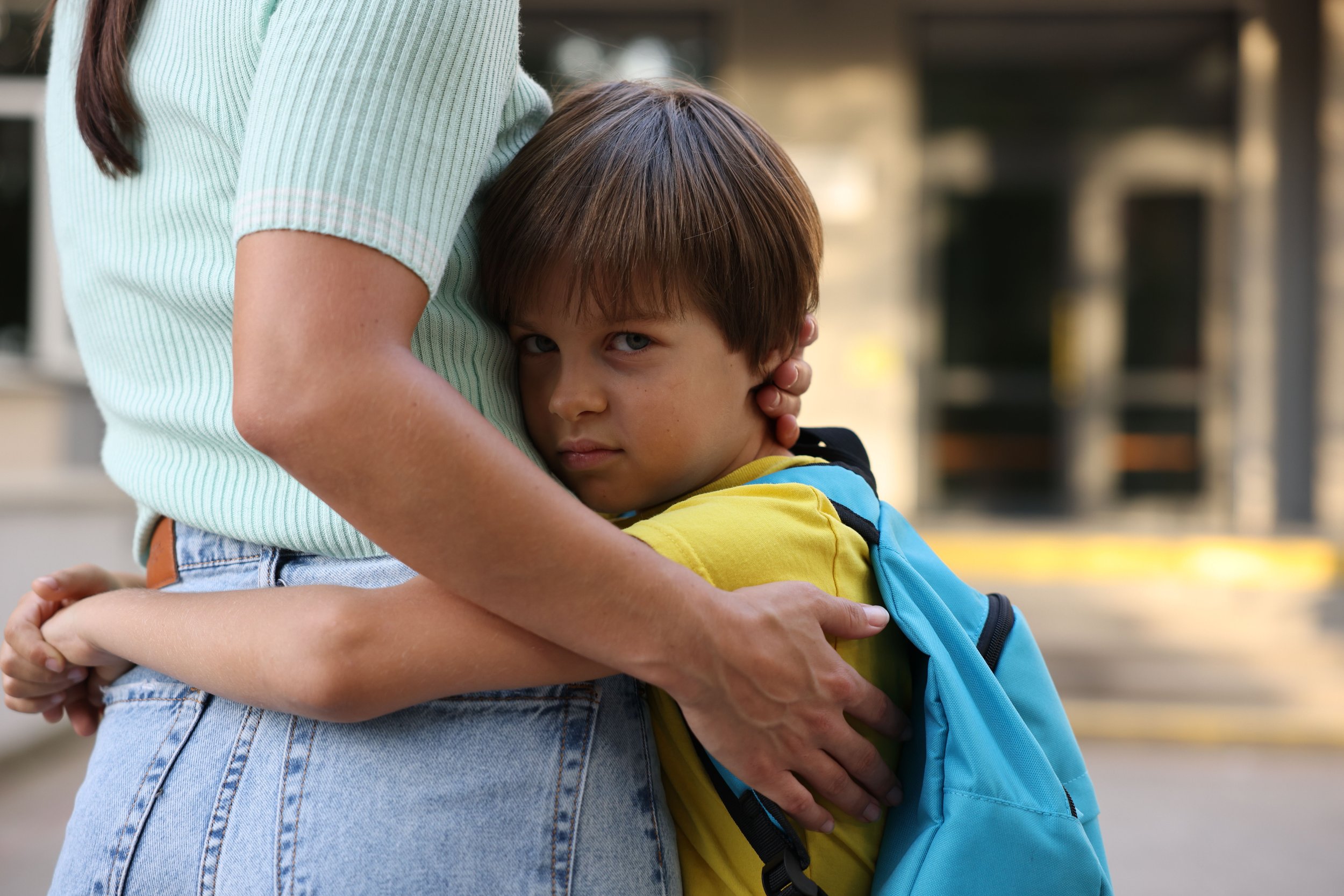
If your child is fighting you every morning about going to school, you’re probably asking the same question a lot of parents ask:If your child is fighting you every morning about going to school, you’re probably asking the same question a lot of parents ask:
Is this just a rough morning—or is this school refusal?
The difference matters more than most people realize. A rough morning is temporary and usually improves with sleep, routine, support, and calm firmness. School refusal, sometimes called school avoidance, is driven by emotional distress. It can escalate quickly and often requires a different kind of support.
The challenge is that both situations can look similar at first. A child may cry, complain of a stomachache, cling to a parent, or repeatedly say, “I don’t want to go.”
So, how can you tell the difference?
The answer is usually found in the pattern, the intensity, and how long the behavior lasts. Let’s take a closer look at the five signs that may help you recognize when a difficult morning is becoming something more.
This article is for educational purposes only. It is not a diagnosis, assessment, or individualized treatment plan. Every child and family is different.
What Is the Difference Between School Refusal and a Rough Morning?
A rough morning is usually temporary.
Your child may be tired, worried about a test, or simply not in the mood to go to school. They may complain, move slowly, or become upset. With support, however, they eventually get out the door. The following morning is often easier.
School refusal is different.
School refusal involves persistent emotional distress connected to the idea of going to school. The child is not primarily trying to skip school for fun or simply choosing to be difficult. Instead, their nervous system is responding to school as though it is a threat.
Many children experiencing school refusal actually want to attend school. They may want to see their friends, keep up academically, or participate in their usual activities. But in the moment, they feel unable to go.
This is an important distinction. What looks like “won’t” on the outside may feel like “can’t” to the child.
Sign 1: The Struggle Becomes a Persistent Pattern
Every child has an occasional difficult morning. A rough morning is usually an outlier rather than a predictable part of the week.
School refusal develops into a pattern.
The resistance begins happening repeatedly and may become especially noticeable after weekends or school breaks. Instead of the morning struggle becoming shorter or easier over time, it gets longer and more difficult.
You may find yourself facing the same battle again and again. What began as one late arrival may turn into repeated tardiness, missed classes, or entire days spent at home.
When evaluating your child’s behavior, look beyond one difficult morning. Ask yourself whether the problem is temporary or whether it is becoming a cycle.
Persistence is often the first clue that you may be dealing with something more than normal reluctance.
Sign 2: The Emotional Reaction Is Intense
A child having a rough morning may complain or cry briefly. They may need extra encouragement, reassurance, or structure before they are ready to leave.
With school refusal, the emotional response is often much more intense.
You might see:
Panic
Full meltdowns
Freezing
Extreme clinging
A level of distress that feels disproportionate to the situation
The child may freeze at the front door, refuse to get out of the car, or become completely overwhelmed when it is time to separate at drop-off.
These reactions are not always best understood as simple misbehavior. Although the behavior may look oppositional, the primary driver is often anxiety or emotional overwhelm.
The intensity of the reaction gives parents important information. Your child may not simply be expressing a preference to stay home. Their nervous system may be signaling that they do not feel able to cope with going to school.
Sign 3: Physical Symptoms Follow a School-Day Pattern
School refusal often comes with physical complaints.
Children may report:
Stomachaches
Headaches
Nausea
Dizziness
Of course, children can experience these symptoms for many reasons. The important thing to notice is the pattern.
Do the symptoms appear reliably on school mornings? Do they improve when your child is allowed to stay home? Do they disappear on weekends?
When physical symptoms consistently follow a school-day pattern, they may be connected to the child’s emotional distress about school.
These complaints should not automatically be dismissed as excuses. Anxiety and emotional overwhelm can show up through the body, especially when a child is struggling to explain what they are feeling.
Sign 4: The Problem Begins Interfering With Daily Life
Another important sign is functional impairment. In other words, the struggle is no longer limited to an unpleasant morning. It begins affecting the child’s ability—or the family’s ability—to function.
School refusal may interfere with:Another important sign is functional impairment. In other words, the struggle is no longer limited to an unpleasant morning. It begins affecting the child’s ability—or the family’s ability—to function.
School refusal may interfere with:
Basic morning routines
School attendance
Academic progress
Friendships
The family’s daily functioning
At home, this might look like hour-long morning battles or last-minute physical complaints that repeatedly disrupt everyone’s routine.
At school, it may look like frequent visits to the nurse, difficulty separating at drop-off, or regularly leaving school early.
At this point, the issue is no longer just a late arrival. The distress is beginning to affect several areas of the child’s life.
Functional impact is one of the clearest signs that additional support may be helpful.
Sign 5: “I Don’t Want To” Becomes “I Can’t”
Listen closely to the language your child uses.
A child having a rough morning may say:
“I don’t want to go.”
“School is boring.”
“I want to stay home.”
With school refusal, the language often shifts toward genuine fear or a sense of being unable to cope.
The message becomes: “I can’t.”
Your child may appear to feel trapped by the situation. They are no longer simply expressing what they would prefer to do. They are communicating that going to school feels impossible in that moment.
That shift from “I don’t want to” to “I can’t” is important information. It may indicate that the child’s emotional distress has become stronger than their ability to move through it on their own.
Why Does School Refusal Happen?
School refusal is almost always rooted in anxiety or emotional overwhelm.
A child’s brain may activate a fight-flight-freeze response around different school-related stressors. These could include:
Social worries
Academic pressure
Separation fears
Sensory overload
A combination of several stressors
When a child stays home, their anxiety temporarily decreases. In that moment, avoidance brings relief.
Unfortunately, that relief can teach the nervous system that staying home equals safety. The next time school approaches, the child may experience the same distress—or an even stronger reaction. Over time, the avoidance cycle becomes more firmly established.
This is why simply pushing harder, without addressing the underlying distress, often backfires. The behavior may be happening on the surface, but anxiety is frequently driving it underneath.
School Refusal Is Not the Same as Truancy
School refusal is commonly misunderstood.
One frequent mix-up is confusing school refusal with truancy. Truancy is usually connected to wanting to do something more enjoyable and is often hidden from parents.
School refusal generally happens with the parent’s knowledge. The child’s behavior is driven by emotional distress rather than a desire to secretly avoid responsibilities.
Another common misunderstanding is assuming that the child is simply being defiant. School refusal can certainly look oppositional. A child may argue, refuse to get dressed, cling to a parent, or resist getting into the car.
However, behavior that looks defiant can still be driven by anxiety.
Understanding that distinction does not mean ignoring the behavior or removing all expectations. It means recognizing that the child may need empathy and structure, along with help addressing the emotional distress underneath the refusal.
Will My Child Grow Out of It?
One of the most common questions parents ask is, “Is this just a phase?”
Sometimes mild reluctance is temporary. Children can have difficult mornings, worries about school, or short periods when getting out the door is harder than usual.
Persistent school refusal often does not improve on its own. It can become more entrenched the longer it continues.
When you see a combination of persistence, intense emotional reactions, school-day-specific physical symptoms, and disruption to daily functioning, the problem is less likely to be just a passing phase.
Intentional support sooner rather than later can make the return to school easier.
What Would a Clinician Consider?
A clinician looking at possible school refusal would consider the complete pattern rather than focusing on one behavior or one difficult morning.
This may include:
How long the attendance problem has been happening
The intensity of the child’s distress
Whether symptoms are specific to school days
Recent stressors or transitions
Sleep
Learning challenges
Social dynamics
The child’s overall functioning
How the family is responding
Family responses are an important part of the picture. Parents naturally want to comfort a distressed child. However, well-intentioned reassurance or accommodation can sometimes unintentionally reinforce the avoidance cycle.
The goal is not to blame parents or children. It is to understand what is maintaining the pattern so the family can identify realistic next steps.
When Is It Time to Consider Professional Support?
Professional consultation may be worth considering when school resistance is:
Persistent
Becoming more intense
Creating significant family stress
Affecting the child’s academic progress
Interfering with friendships or social development
During a first appointment, a clinician will typically gather a detailed history of the child’s attendance pattern, explore possible contributing factors, and discuss realistic next steps.
Support is individualized because every child and family is different. What helps one child may look different from what helps another.
Evidence-based support often includes cognitive-behavioral approaches that gently reduce avoidance while helping the child build coping skills. It may also include parent coaching focused on responding with both empathy and structure, as well as collaboration with the child’s school.
Key Takeaways for Parents
If you are trying to decide whether your child is experiencing school refusal or simply having a rough morning, remember these three things:
First, a rough morning is temporary. School refusal is a persistent pattern driven by emotional distress.
Second, look for the five signs: persistence, emotional intensity, patterned physical symptoms, functional impact, and a shift from “I don’t want to” to “I can’t.”
Finally, you do not have to figure this out alone. Support is available, and early intervention can make returning to school easier.
If these signs feel familiar, visit Larsen Behavioral Wellness to learn more about our child and family services or to request a consultation.
This content is educational and is not a substitute for personalized professional care.
Is your child simply having a difficult morning—or could their behavior be a sign of school refusal?
In Episode 1, Dr. Jessica Larsen explains five signs parents should know when a child’s resistance to school may be connected to anxiety, emotional distress, or a deeper concern. You’ll learn how to recognize developing patterns, understand what your child may be communicating through their behavior, and determine when additional support could be helpful.
In this episode, we discuss:
• The difference between an occasional rough morning and school refusal
• Common warning signs parents may notice
• How anxiety can affect a child before school
• Why avoiding school can become an ongoing cycle
• When parents should consider speaking with a mental health professional
• How to respond with support, structure, and compassion
Read the companion article:
https://www.larsenbehavioralwellness.com/blog/school-refusal-vs-a-rough-morning-5-signs-parents-need-to-know
Looking for support for your child or family? Larsen Behavioral Wellness offers evidence-based therapy for children, teens, adults, parents, couples, and families. Appointments are available at our Hoboken, Summit, and Mendham, New Jersey offices, along with online therapy options.
Request a consultation:
https://www.larsenbehavioralwellness.com/contact
Learn more about Larsen Behavioral Wellness:
https://www.larsenbehavioralwellness.com/
Subscribe for weekly conversations and practical guidance covering child anxiety, parenting, school-related concerns, emotional wellness, relationships, and mental health.
#SchoolRefusal #ChildAnxiety #ParentingSupport
DISCLAIMER: This video is intended for educational and informational purposes only. It is not a substitute for professional mental health care, diagnosis, or treatment. If you are concerned about your child’s mental health, please consult a qualified healthcare professional.